2025 OPEN SHORT STORY COMPETITION WINNER
Prize: £2,000
and the winner is…
Corinne Young
WHAT’S LEFT
I don’t know what you would’ve wanted me to do with you when you died. We never talked about it. Almost every time we talked about your death, it went something like:
I’m going to walk into the river with stones in my pockets.
No, please don’t.
Wouldn’t it be poetic? Isn’t that how Virginia Woolf killed herself?
I don’t know.
So I suppose I can’t say for certain you’d love this or hate this. It feels wrong that I’ll never know, and you’ll never be able to tell me. I have your brain in my hands, the brain that should know these things, but without lungs and vocal chords and a tongue, without a heartbeat, the you inside of the brain I’m holding will never communicate with me again. I put you—your brain—in a plastic bag, place it gently in the fridge in your basement, and go outside.
I do what you do, because you are not here to do it, and I can only assume that you want it done.
On a huge wooden table in your backyard, I skin the doe your father killed this morning. It’s that time of fall when the forest around fills the air with the scent of moist pines and my fingers are just cold enough to make cutting the skin free of the flesh feel like a fragile act. You taught me, at seventeen, when to put the knife down and start pulling the skin off. I’ve been doing it by myself for years now, but this is the first time I feel alone.
Off comes the packaging of life. Always a shock to me, how movement is reduced to muscle and meat, but you always said, we are so obviously our bodies. You would irreverently wiggle one of the legs, rippling flesh and dispelling my unease. Without you, I cannot linger; I feel she—that is, the doe—is still there, with her dark eyes observing her own naked form. I leave the body on the table, under the huge gray sky, for your father to butcher and freeze. The skin flaps listlessly against my legs as I carry it away.
Around the corner of your huge wooden house, you have an old shed, crooked with a patched roof. You used to spend so much time braintanning that I almost expect you to be there when I open the door, but of course, there’s only the drafty air and curved tools hanging on hooks. Your father has set out huge pink basins to soak the hides in, and in them I catch a dim reflection of my sleepless eyes, my bloodstreaked chin. I gather my hide up in my arms, wet and smelling of iron, and push it into the farthest left basin.
We used to wash each other clean after days like this. After the exhausting physical labor, we’d clamber into the shower together and soap the gore off until we shone like newborn things. Your explosive curls would bow to the weight of the water and plaster against your back, reducing your silhouette to the shape of your body. Only then did I agree that yes, we are nothing but our bodies. You would’ve hated Descartes if you read him, or maybe you did; somehow I can’t remember if he was ever mentioned.
I take a shower, I get dressed.
I catch sight of your father, who’s staring at the blazing fireplace as if he’d like to climb into it. I don’t know how to ask him how he misses you—if he cries or wishes I’d stop visiting or wants his wife to call him back—and I don’t know that he’d want me, the woman who whisked his daughter away, to be the one to ask. So I just leave.
The next day, I drag the hide out, slick with the alkaline fluid. You never taught me what’s in there; you never will. Laying the skin on a thin log your father has stripped of bark, I wipe my wet hands on my pants and grip the fleshing knife with both hands. I remember how you taught me, how we giggled like seventeen year olds do about how your arms came around me, like sexy people did over billiards tables in the movies. We used to sneak racy films from your bookshelves while your parents were arguing and play them real quiet, lying on your hand-me-down comforter. The way you laughed never changed.
The hair on a doe is thick and coarse, but it comes off easy, so easy under the knife, exposing the shocking white skin underneath. I called it the “scalp” last year and you laughed so hard, “a little bit of piss came out.” White strip by white strip, tufts of hair disappear.
The sky clears and sunlight pokes through the trees that ring your huge, green backyard, and I let it warm my clammy skin until I’m sweating, until the hide and I have the same wet shine. My back aches, my wrists, my biceps. I scrape off the grain under the hair, the layer that hardens leather, until the sweat slips down my wrists and my lungs feel tight. I never did this as much as you, and I don’t feel built for it. I wonder suddenly whether I can make something worthy of you.
“How’s it coming?” Your father, never much of a talker, hovers a few feet away with his own hide and fleshing knife.
He’s stopped shaving and perhaps stopped sleeping in the days since you died. If you were here, you’d be appalled by the way he bends his long back, shoulders curled, but if you were here, he’d be standing straight again, the way you knew him. You took after your mother: rounder, loud and chatty. You went to college, like your mother, and littered our shared apartment with vegan philosophy but evidently never felt compelled by it. He never seemed to blame your mother though; he blamed me.
“Alright,” I say, grateful for a reason to unbend my back. “And you?”
“Alright,” he says. I wonder if he wants to ask me how I miss you. Whether I cry, whether I proposed this project because I can’t stay away from your childhood home, whether I’m angry your mother left the funeral early to catch a flight.
“Good,” I say, and he says, “good,” too, and then he’s gone and I bend my back again.
I ask your father if the hide looks good. I want it to be beautiful and made by me, two things that rarely coincide, yet the bone-white hide is smooth and lovely, as if you have possessed me, and made through my hands what you can no longer make through yours. In the absence of the fur, two streaking bullet scars have made themselves known over the left shoulder, but I don’t mind. It gives the doe that will be your vessel a particularity that seems fitting.
Your father looks up for a moment from his graining. “Good.” His only word.
I don’t know if he means it, or if he’s saying it because his dead daughter’s wife is asking. Maybe he simply wishes I’d leave him so he can get lost in the strain of his body again. You would have been honest, but you are not here and I will never know if you like this hide or if you liked Descartes or whether you wanted me to save you when you called me to say goodbye, I’m doing it, or whether you just wanted to say goodbye.
I’m saving you now, in a way. I’m saving what’s left.
I open the basement fridge and take you from the plastic bag. You, as in, Descartes’ idea of the self as a mind without a body. You, as in, your brain, which I place in a large pink bucket of hot water gently, with both hands cupped under it, like an animal I am releasing into the wild.
I wish you would dissolve on your own, but instead, I have to crush you, stir you, I have to kill you again and again. I have to remember you are dead already, because that’s the only way I can stand to watch you disappear until there’s nothing but pinked, foaming liquid, saturated with oils, saturated with you.
I gather the hide again, an embrace, and push it into the bucket. You taught me to create a bubble of the skin around my fist, fill with the slimy brain liquid, and push, so that the liquid moves through the hide. Over and over. All the oils, getting caught in the fibers of the skin.
“Make sure you don’t miss any spots,” you’d tease, knowing I felt weirdest about this part of the process. You’d kiss my forehead, pull me up to dance clumsily with our brain-slippery hands.
I imagine these traits of yours inhabiting the doe hide each time I push another fistful of water through. That laugh of yours. The way you pulled your sleeves over your hands when you were upset. Your memories of your visits to your mother, who always fed you chicken soup, even in the summer. The nights you spent wide-eyed in my arms, trading secrets, making love, thinking about death.
I make sure I don’t miss any spots. I do it to keep as much of you as I can, horrified by something I somehow failed to foresee: there will always be parts of you left in this bucket, parts of you dumped unceremoniously into the soil. I do it until I don’t think my arms can move anymore.
But they must. I move my arms to wring you out with a stick, unspeakably pained by the water that is you which falls onto the grass, onto my shoes. You are everywhere, dripping down my elbows as I loop the hide around the stick, plant my feet, and twist until my muscles scream. I move my arms as I tie you up with sinew to one of the frames your father built, the two bullet scars on the left shoulder gleaming; I must stretch you out while you’re still wet so I push my fist into you until you strain around me, slick organic, and yes I know what it sounds like but that’s what it feels like, darling, it feels like love.
Your father adds the rest of you to a solution of pig brain he’s using on his own set of hides. He does it before I can tell him not to, before I can ask him why. I chose a doe because you liked them best; he puts you through the hide of a muskrat; he puts you through foxskin with the fur still on. Skins to sell. I thought he didn’t want to give his daughter away.
After we smoke the hides, sealing you in forever, I take you to bed. Our bed, a queen size, sits half-used in our little house. We picked something an hour from your home and ten minutes from a college town, close enough for the highway roar to lower the rent. We’d sit and watch cars go by, joking about what we’d one day do with the money we were saving by putting up with it.
You always made the sheets smell like smoke, having spent so much time smoking hides, and now here you are again, tan and smelling like smoke, your weight on me in the night.
I don’t know how much of the brain actually stays in the hide, and how much is wasted. I don’t know if you knew, if you could have told me. I don’t know how much of you—sixty percent? Ten?—brushes against my cheek softly when I’m wide-eyed at night, listening to the highway and thinking about death.
I take the hour drive back. I ask your father if I can buy the batch of muskrat and fox he just tanned, because I’ll never know what you would’ve liked me to spend the money on.
His downturned mouth twitches. He doesn’t even look at me. “Why?”
I watch him stare into the fireplace. “I want more of her around me.”
He remains silent for a long time, long enough that I begin to fidget on the couch, then he draws his sleeve over his hand and swipes at his eyes. The gesture startles me, it’s so you-like; I never thought you were like your father at all. Now I know, then, that he cries.
I open my arms instinctively. I know your father was never a hugger, but seeing him cry is like seeing a newborn cry, so helpless.
He lets me hold him awkwardly for a moment before drawing away. But he lets me have the skins for free.
About our winner…
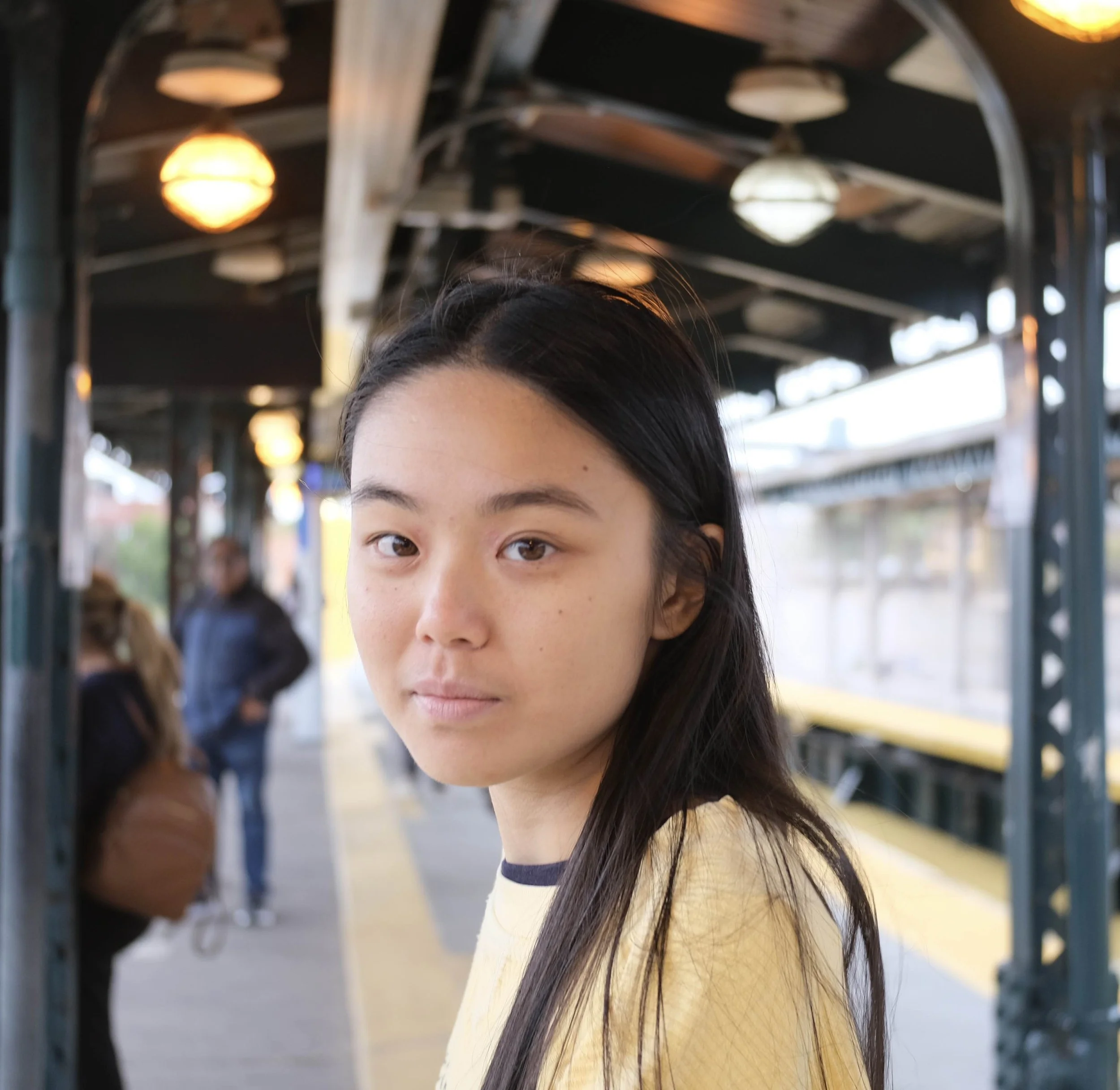
Corinne is an undergraduate at Sarah Lawrence College, finishing out her senior year. Her writing is often about love and obsession, the gruesome and the beautiful, and the complications of love between people who don't understand each other. She's studying creative writing and literature, and she lives to write and dreams of writing to live. You can follow her on Instagram at @corinne_young_writes.